If you're a nutritionist or dietitian in 2026, you already know the math doesn't quite add up. You went to school to help people change their relationship with food — not to spend half your week answering "what time is my appointment again?" on Instagram, chasing clients for food diaries they forgot to send, and rebuilding the same meal plans you've built a hundred times before.
The good news: in the last twelve months, AI automation has moved from "nice idea" to "non-negotiable competitive advantage" for solo practitioners and clinics alike. Practices that adopted AI tools in 2025 are now reporting an average of 12+ admin hours saved per week, 40% fewer no-shows, and 25–35% more client retention. Here's exactly how AI is reshaping the field — and how you can plug it into your own practice without becoming a tech company.
The real problem: nutritionists are drowning in admin work
Most independent nutritionists and small clinics burn roughly 35% of their week on tasks that have nothing to do with clinical work:
- Replying to "do you have an opening this week?" DMs and emails
- Sending and chasing client intake forms, food diaries, and lab results
- Manually building 7-day meal plans tailored to allergies, goals, and preferences
- Following up on canceled or skipped sessions
- Reminding clients to log meals or step on the scale
- Writing the same nutrition education content over and over for new clients
1. AI chatbots that handle bookings 24/7
The most immediate win for nutrition practices is a smart chatbot integrated with your website, Instagram DM, and WhatsApp. A modern AI assistant can:
- Answer common questions about services, pricing, and approach
- Qualify leads by asking about goals, dietary restrictions, and budget
- Book consultations directly into your calendar
- Send pre-session intake forms automatically
2. Automated client onboarding and food diary collection
This is where AI saves the most time. Instead of manually emailing every new client a welcome packet, intake questionnaire, food diary template, and educational PDFs, an automated workflow can:
- Send a personalized welcome sequence the moment a client books
- Collect intake data through conversational forms (clients are 3× more likely to complete a chat-style form than a PDF)
- Remind clients to submit food diaries with friendly nudges via SMS or WhatsApp
- Parse photographed meals or free-text food logs into structured nutrition data
- Flag red flags (skipped meals, binge patterns, missing macros) for your review before the next session
3. AI-assisted meal plan generation
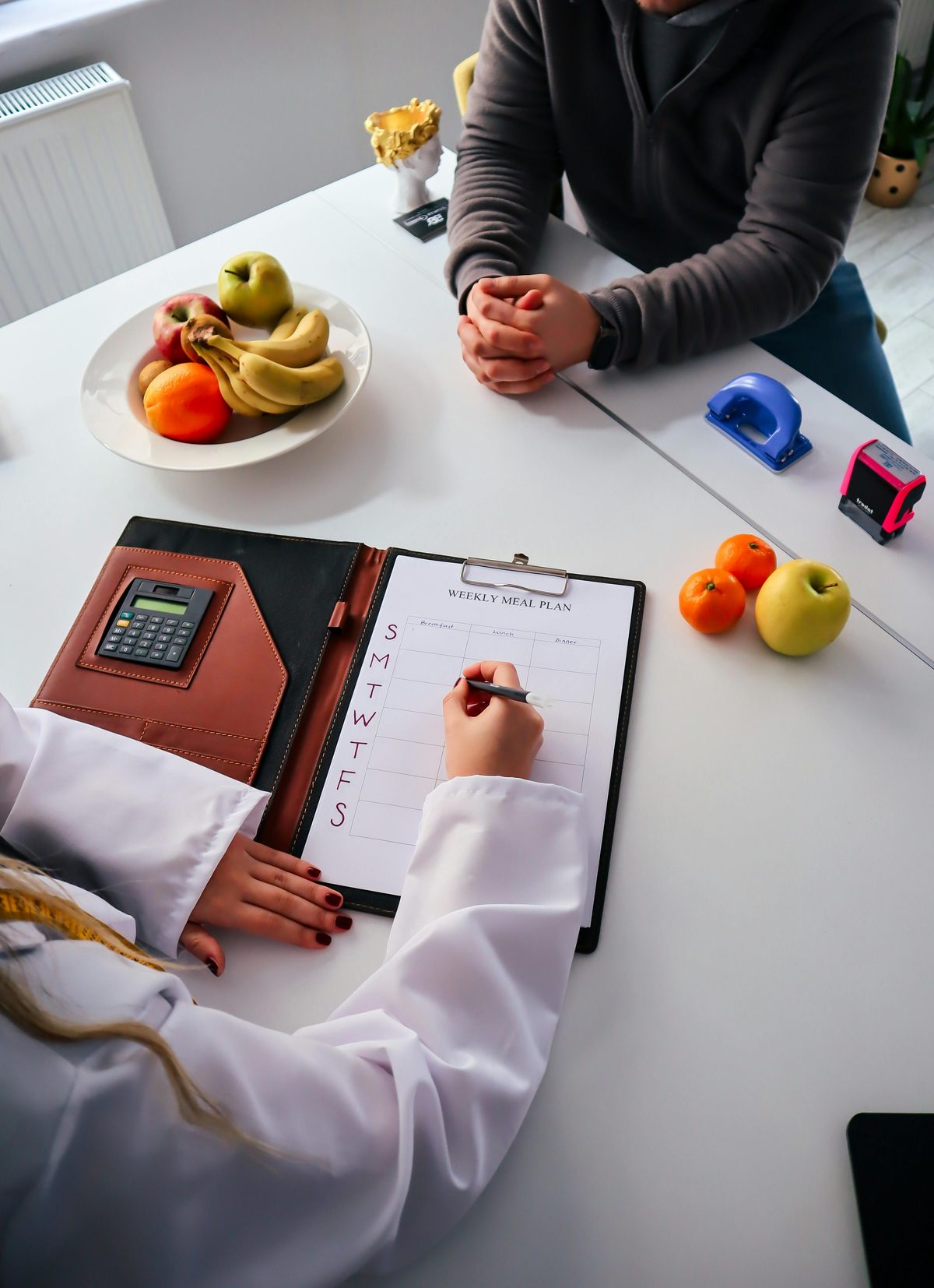
Meal planning is the most labor-intensive part of clinical nutrition work. AI doesn't replace your clinical judgment, but it can generate a strong first draft based on:
- The client's goals (fat loss, muscle gain, IBS management, PCOS, athletic performance)
- Allergies, intolerances, and food preferences
- Cultural and budget constraints
- Cooking skill and prep time available
- Macros and micronutrient targets you specify
4. AI follow-ups that actually work
The biggest predictor of client success isn't the perfect plan — it's consistent follow-up. AI systems can send personalized check-ins via SMS, WhatsApp, or email between sessions:
- "Hi Maria, how did the lunch swap go yesterday?"
- "Quick reminder to log your weekend meals before our Tuesday session"
- "You haven't checked in for 4 days — everything OK?"
5. Smart no-show prevention
No-shows are a silent revenue killer. A 50€ session that doesn't happen is a 50€ loss you can never recover. AI-powered reminders combined with easy reschedule links cut no-shows by an average of 40% in nutrition practices. The system sends a confirmation 48 hours before, a reminder 24 hours before, and a "tap to reschedule" option if the client doesn't confirm — all without you touching a thing.
6. Content and education automation
Most nutritionists know they should be posting educational content on Instagram and writing newsletter emails — but it never happens because there's no time. AI content tools can draft posts, recipe carousels, and weekly newsletters based on your clinical voice and your most common client questions. You review and approve in 15 minutes a week instead of spending 4 hours writing from scratch.
What about the human touch?
Here's the thing: clients don't want to be ghosted between sessions, but they don't want to feel like they're talking to a robot either. The practices winning in 2026 are the ones using AI to expand their human attention, not replace it — using bots for the 80% of work that's routine, so that the remaining 20% (the actual clinical conversation) can be richer, more present, and more impactful.
If you want to see how this is implemented in practice, the typical setup takes 5–10 days to deploy and starts paying for itself within the first month through saved admin hours and higher show-up rates. For more industry use cases, check out our other articles on AI for healthcare practices.
Ready to get your evenings back?
At TodsAI, we build AI chatbots, automated client onboarding flows, meal-plan-generation assistants, and follow-up systems specifically for nutrition and wellness practices. Most setups are live within a week, fully bilingual (Greek + English), and integrate with the tools you already use — Google Calendar, WhatsApp, Stripe, and the most common nutrition software.
Book a free 30-minute strategy call and we'll map out exactly which automations would deliver the biggest ROI for your specific practice — whether you're a solo nutritionist taking your first steps or a multi-practitioner clinic ready to scale. No fluff, no upsell — just a clear plan you can take action on.