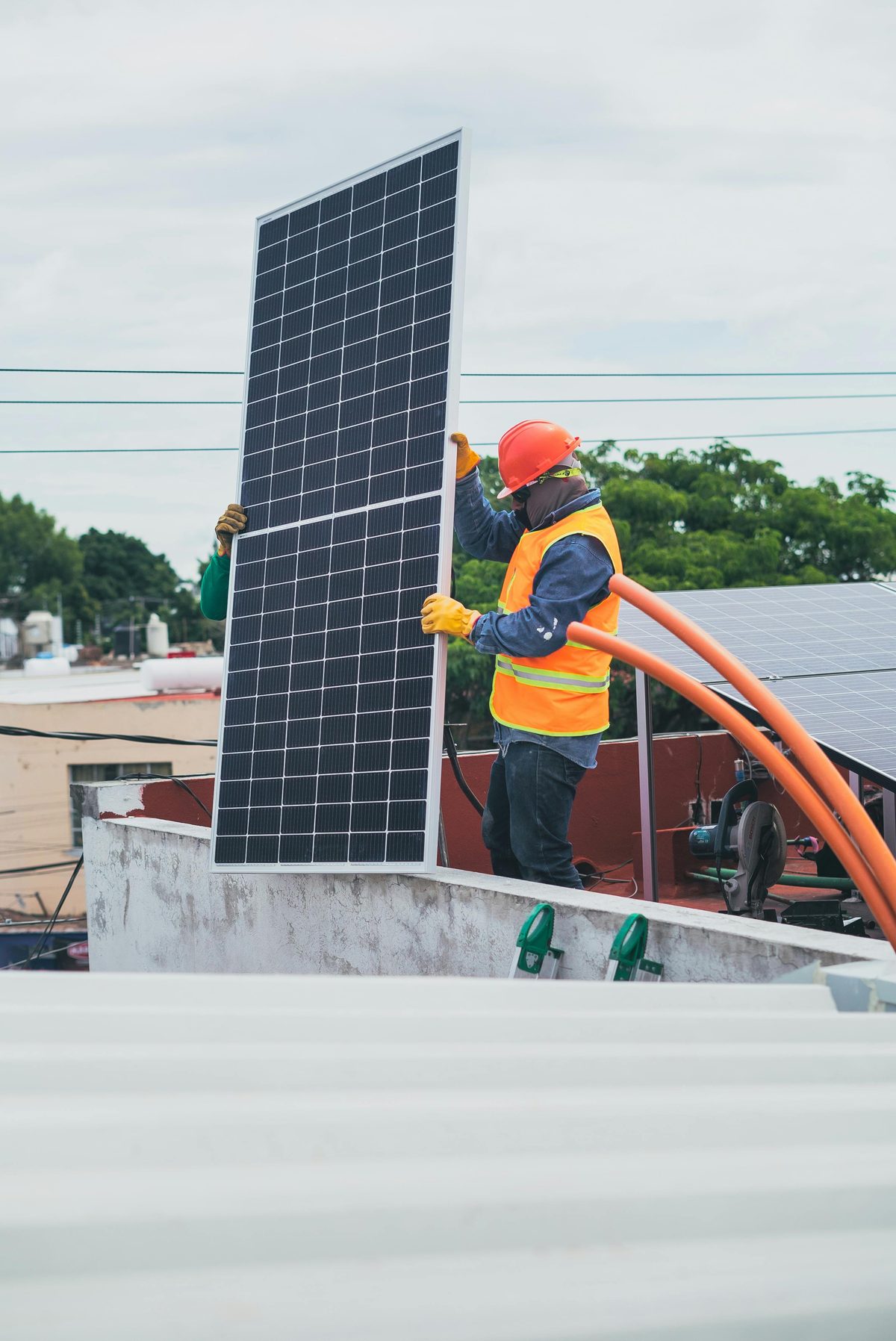
The solar industry has never been busier. Across Greece, Italy, Spain, and the wider Mediterranean, residential solar adoption is breaking records — driven by rising electricity costs, EU green incentives, and homeowners who finally see solar as a financial decision, not just an environmental one. But while demand is surging, most solar installation companies are still running their operations with the same paperwork, phone calls, and spreadsheets they used five years ago.
The result? Quotes that take a week to send. Crews booked weeks out while half-finished leads sit untouched. Permit applications buried under document chaos. And a growing pile of "I'll think about it" prospects who never get followed up with.
In 2026, the installers winning more deals — and protecting their margins — aren't necessarily the ones with the lowest prices or the biggest sales teams. They're the ones using AI automation to compress the entire customer journey from "I saw your ad" to "panels on the roof."
The bottleneck nobody talks about: speed-to-quote
Studies on home improvement sales consistently show the same pattern: the company that responds first wins roughly half of the deals, regardless of price. For solar, where homeowners are getting three or four quotes from competitors, this is brutal. If your team takes 48 hours to send a quote and the next installer sends one in two hours, you've already lost.
AI automation solves this in two ways. First, AI-powered chatbots and voice agents capture lead details the moment a homeowner submits a form, calls your office after-hours, or sends a WhatsApp message — collecting roof type, energy bill, address, and timeline before any human touches the inquiry. Second, AI-driven quoting tools pull satellite imagery, energy bill data, and local solar production averages to generate a personalized estimate in minutes, not days.
We've seen Mediterranean installers running this stack drop their average quote turnaround from 4 days to under 3 hours. The conversion lift speaks for itself.
Qualifying leads before you waste a site visit
Site visits are the single most expensive cost in a solar installer's pipeline. A van, a technician, and a 90-minute round trip — gone whether the homeowner buys or not. The dirty secret of the industry is that 30-40% of site visits are wasted on people who can't be financed, have unsuitable roofs, or were never serious to begin with.
AI lead qualification fixes this upstream. A well-trained AI agent can ask the right questions in the first conversation: roof age, shading, mortgage status, monthly energy spend, motivation, decision-maker present. It scores the lead, flags red flags (north-facing flat roof, recent bankruptcy, renters who can't authorize installation), and routes only qualified prospects to your sales team. Your closers spend their time on people who can actually sign — not on tire-kickers.
If you want to see how this kind of qualification flow looks in practice, you can explore our services for solar and home services businesses.
The paperwork problem: permits, grid applications, and subsidies
Anyone who has run a solar company knows the real bottleneck isn't sales — it's the post-sale paperwork mountain. In Greece alone, a typical residential install requires DEDDIE grid connection forms, net metering agreements, technical drawings, and (for retrofits) building permission updates. In other countries it's similar: utility interconnection, HOA approvals, permits, and government subsidy claims.
AI document automation now handles most of this. Modern AI tools can read a customer's energy bill and prefill grid connection applications, generate technical schematics from a roof scan, autocomplete subsidy paperwork, and flag missing information before submission — all in minutes. What used to take a back-office employee 4-6 hours per project takes 20 minutes. For an installer doing 10 jobs a week, that's a full-time hire's worth of capacity recovered.
You can read more on document automation for service businesses elsewhere on our blog.
Smarter scheduling means more installs per crew
Crew utilization is the hidden margin lever in solar. A two-person crew that does five installs a week instead of four is 25% more profitable on the same payroll. AI scheduling tools optimize routes, group jobs by neighborhood, account for weather forecasts, factor in equipment delivery windows, and rebook canceled jobs automatically. Some installers have reported squeezing one extra install per crew per week — without working longer hours.
When integrated with your CRM, AI scheduling also automates customer-facing communications: install confirmations, "your crew is 30 minutes away" notifications, post-install care guides, and review requests. Customers feel taken care of. Your team stops spending hours on coordination calls.
To see how the implementation process typically works, our team can walk you through it on a free strategy call.
Real numbers from the field
Solar companies running AI automation in 2026 are reporting:
- Quote turnaround: down from 3-5 days to under 4 hours
- Lead-to-appointment rate: up 35-50% with 24/7 AI response
- Wasted site visits: down 40% with AI pre-qualification
- Back-office hours per install: down from 5 hours to under 1 hour
- Customer review volume: up 3-4x with automated follow-up
Where to start
You don't need to overhaul your business overnight. Most solar installers see their biggest gains by starting with a single bottleneck — usually quote turnaround or lead response — and layering AI on top of their existing CRM and field service software. Within weeks, the automation pays for itself.
At TodsAI, we build custom AI chatbots, lead qualification systems, and automation workflows specifically for solar and home service businesses. From a 24/7 multilingual chatbot that captures homeowner inquiries to a full backend automation that handles permits and crew scheduling, we deliver in 24 hours to two weeks depending on scope.
If you're ready to stop losing deals to faster competitors, book a free strategy call and we'll show you exactly where AI can save your team time and win you more installs in 2026.